 Launch
Newton's Laws of Motion
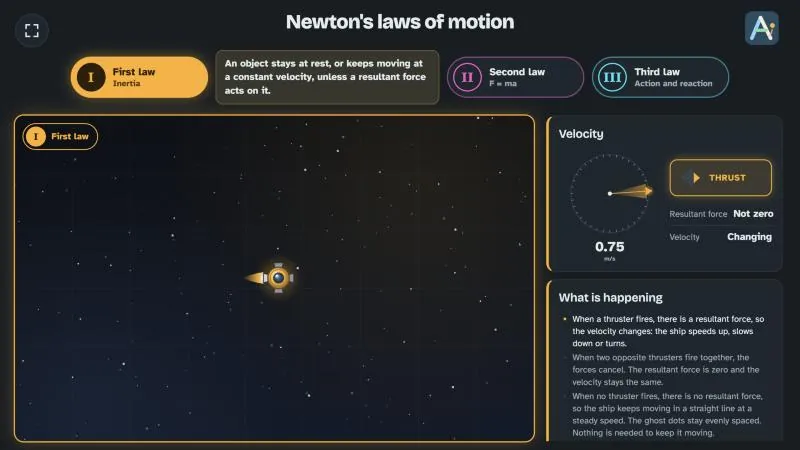
Fly a spaceship with thrusters to explore inertia, F = ma and force pairs, then take on docking and formation challenges.

Interactive physics simulations for teachers and students.
Plus excellent videos, simulations and articles from elsewhere that I use in my teachingBrowse
31 simulations
Launch Fly a spaceship with thrusters to explore inertia, F = ma and force pairs, then take on docking and formation challenges.
 Launch
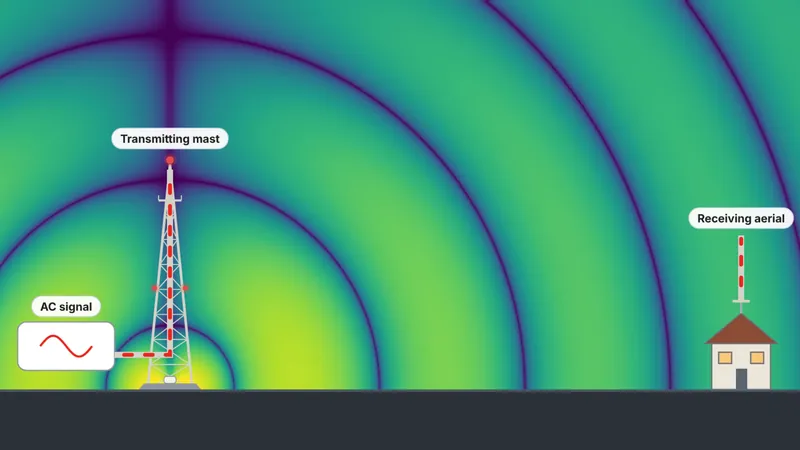
An alternating current in a mast sends radio waves out to a receiving aerial. See the E and B fields, diffraction over a hill, and AM and FM.
 Launch
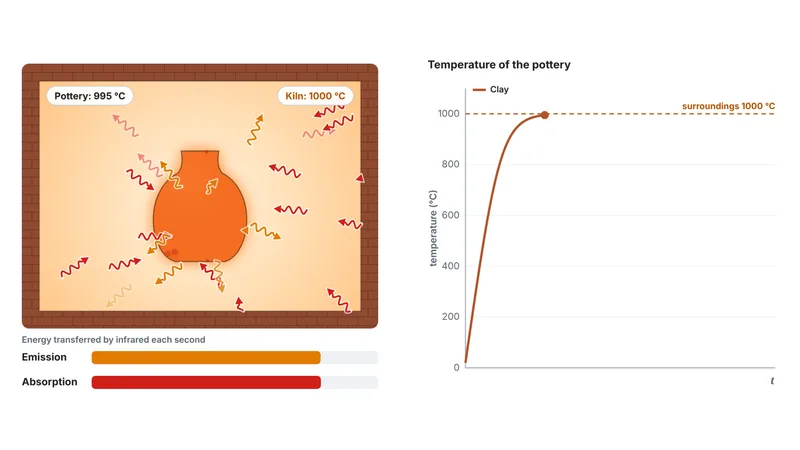
Watch a banana, a kiln-fired pot and a frozen bagel warm up or cool down to their surroundings, and see how matt black and shiny silver surfaces change the rate.
 Launch
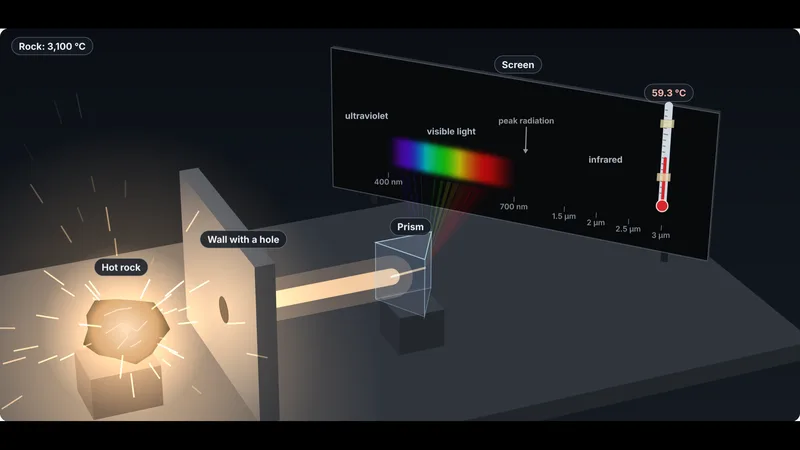
Heat a rock from room temperature to the temperature of a star. A prism splits its light onto a screen with a thermometer in the infrared, beside the black body curve.
 Launch
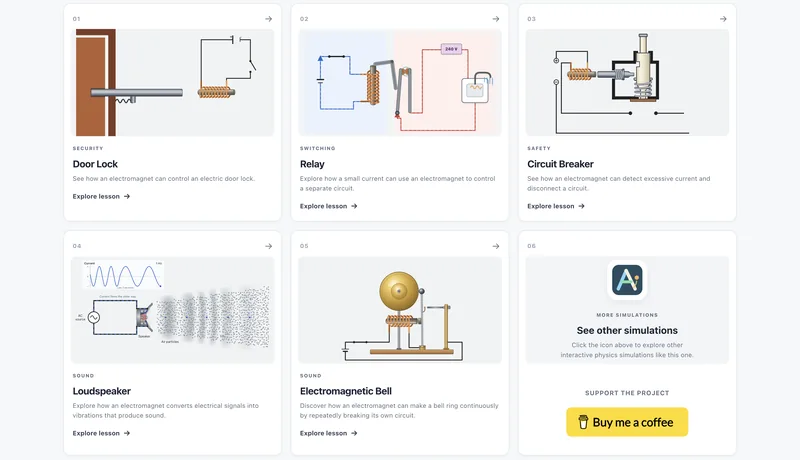
Explore how electromagnets power devices such as relays, speakers and electric motors.
 Launch
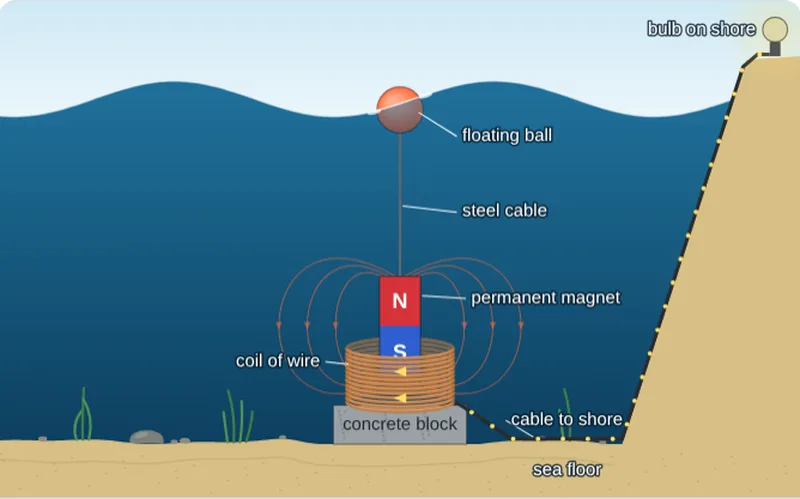
Waves lift a floating ball that pulls a magnet through a coil on the sea floor. Change the waves, the turns and the magnet, and watch the alternating p.d. on a voltmeter and a graph.
 Launch
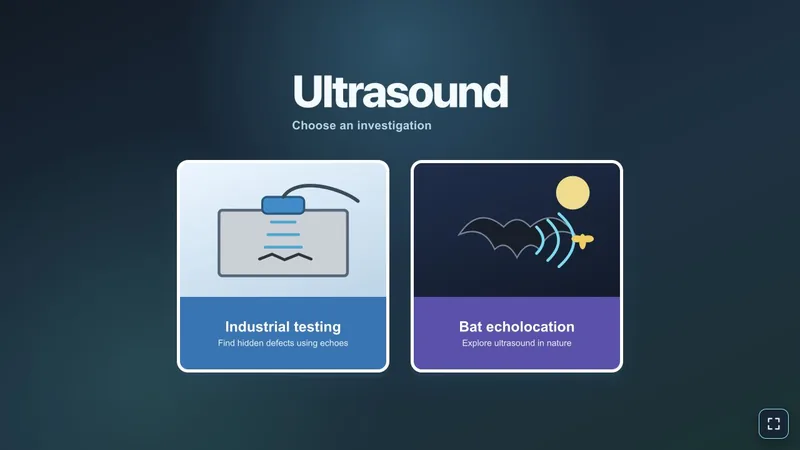
Investigate pulse-echo imaging, reflections and how distance is inferred from time of flight.
 Launch
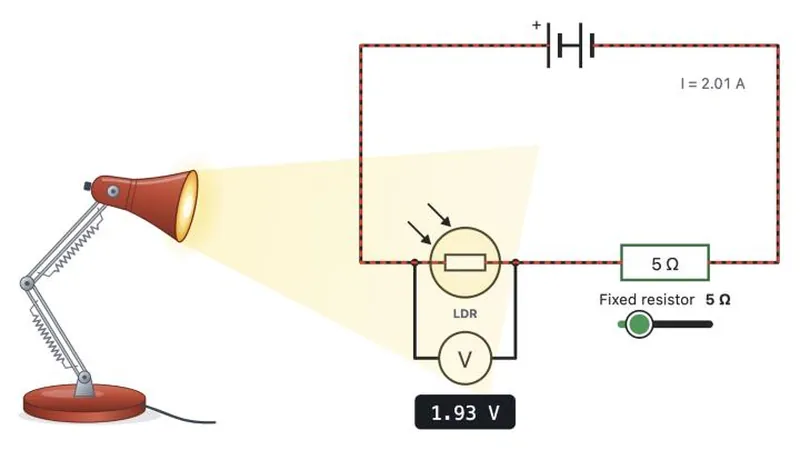
Change the light level or temperature in a potential divider and watch the resistance and the voltmeter reading respond.
 Launch
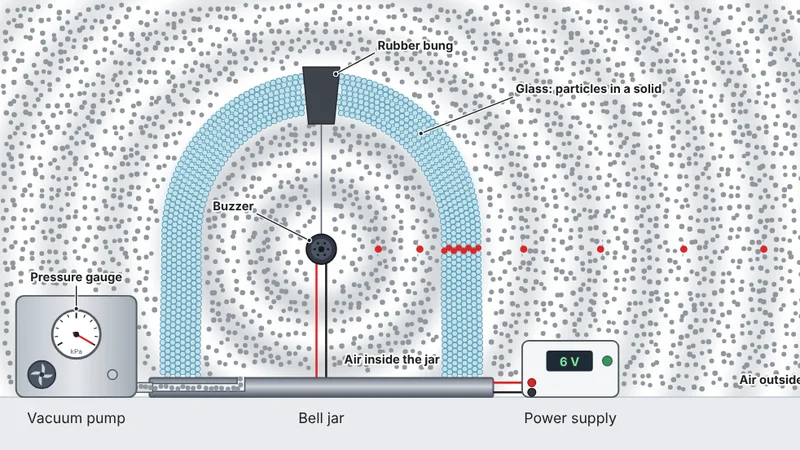
See how a vibrating loudspeaker makes a sound wave in air, then pump the air out of a bell jar and watch the sound fade away.
 Launch
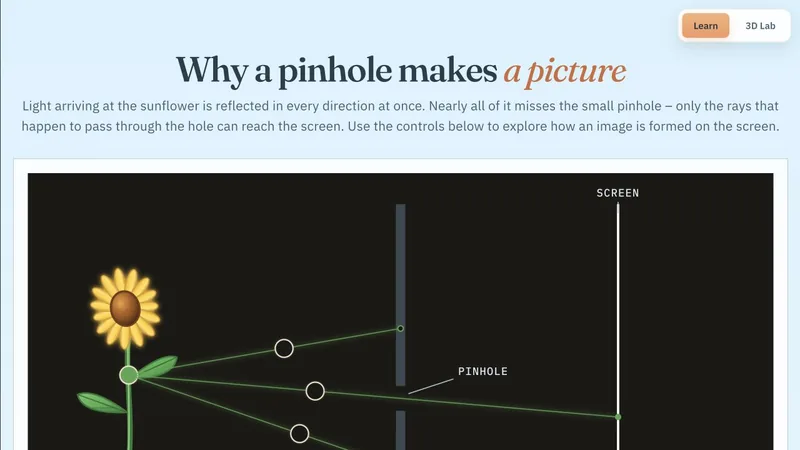
Move the object, aperture and screen to explore image inversion, size and sharpness.
 Launch
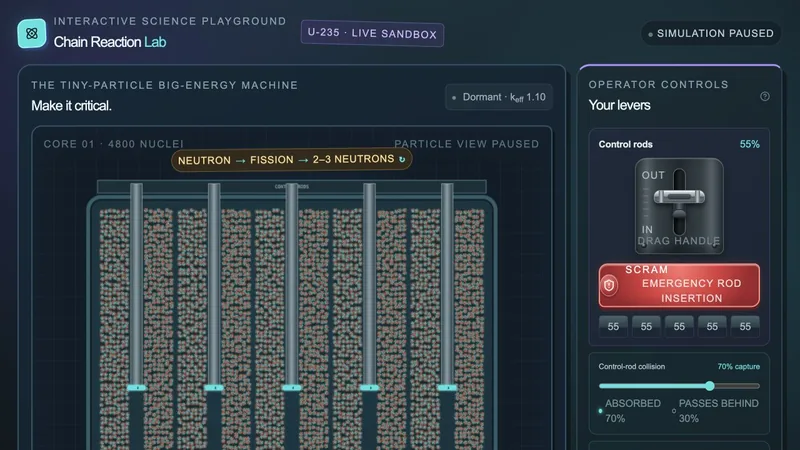
Control rods, neutron capture and chain reactions in a live U-235 reactor sandbox.
 Launch
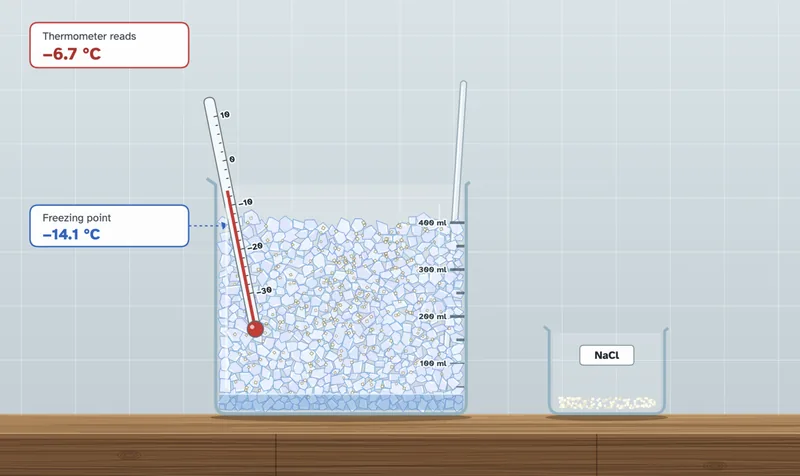
Explore how salt lowers ice’s melting point and how melting and freezing transfer latent heat.
 Launch
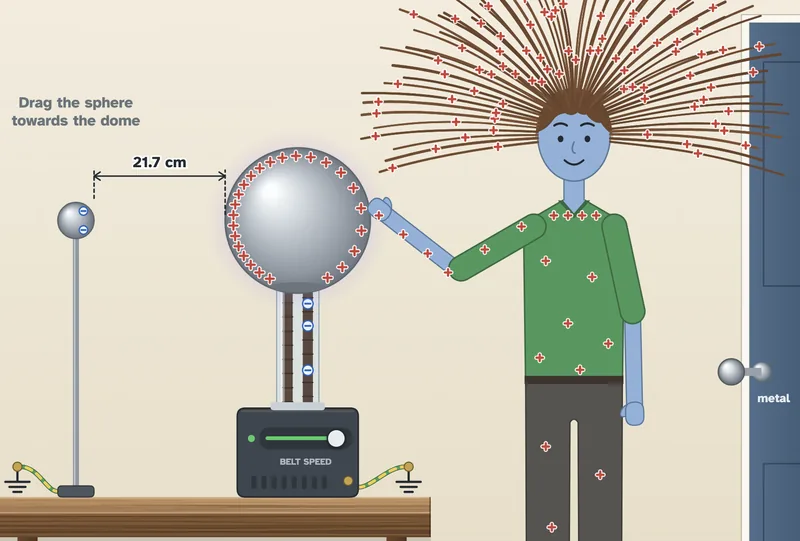
Charge the dome with the belt, draw sparks to an earthed sphere and make a person’s hair stand on end.
 Launch
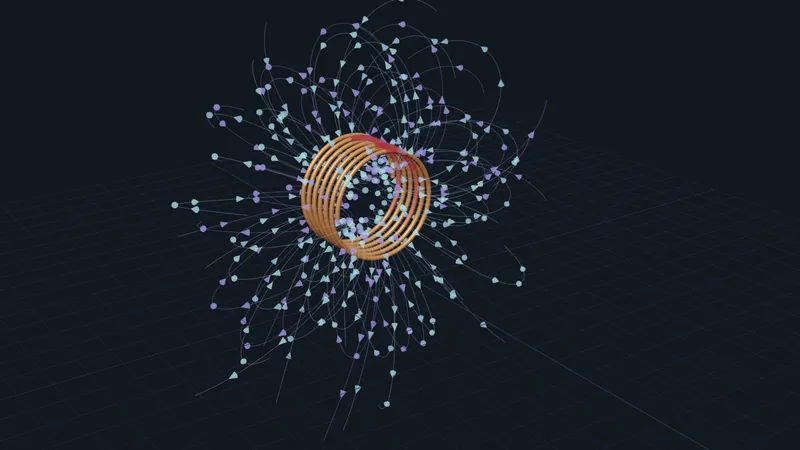
Watch a straight wire form a coil, then explore the magnetic field produced by a solenoid in 3D.
 Launch
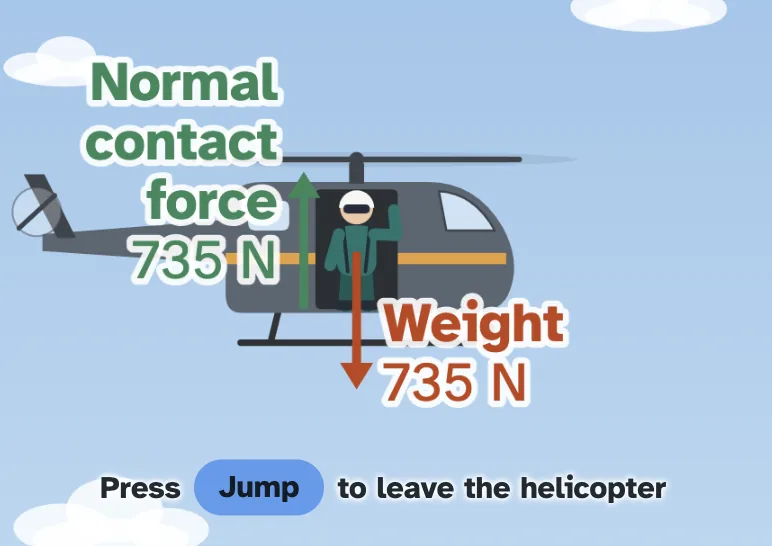
See a skydiver accelerate, reach terminal velocity, and slow safely after opening a parachute.
 Launch
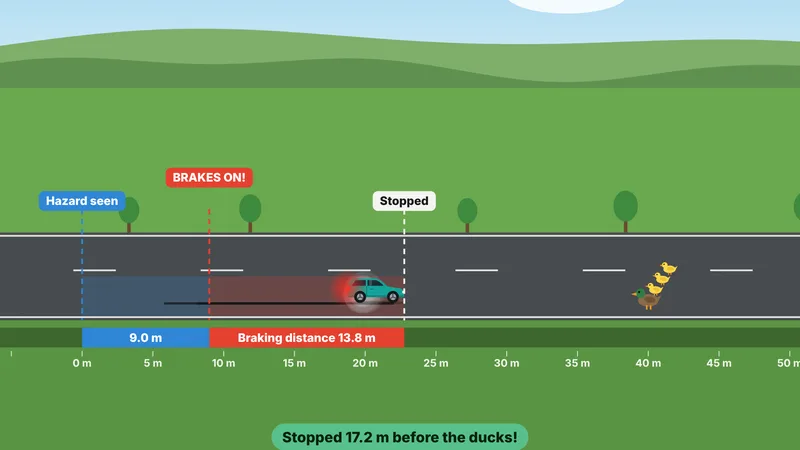
Drive at different speeds and brake for ducks on the road. See how tiredness, distractions, wet or icy roads and worn tyres change the thinking and braking distances, then test your own reaction time.
 Launch
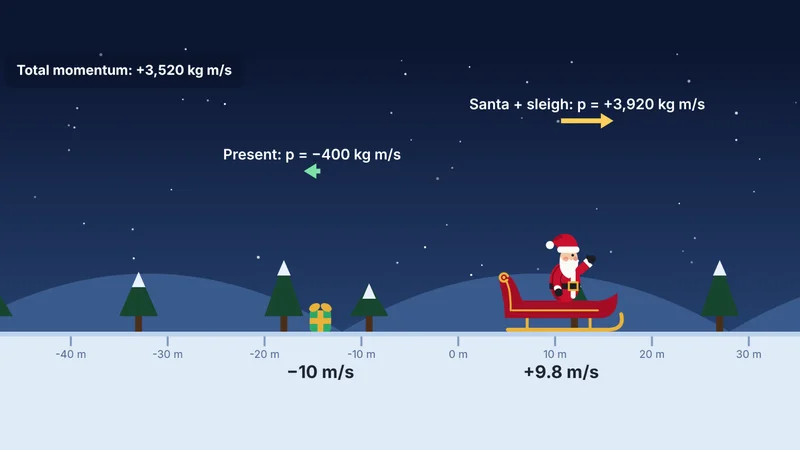
Santa throws a present off his sleigh, a reindeer kicks off, and sledges pile up on the ice. Check that total momentum before equals total momentum after, then try ten calculation questions.
 Launch
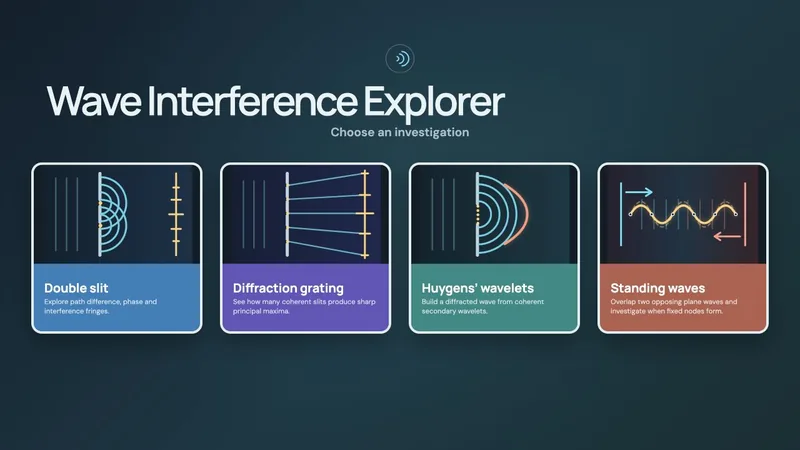
Explore double slits, diffraction gratings, Huygens’ wavelets and standing waves.
 Launch
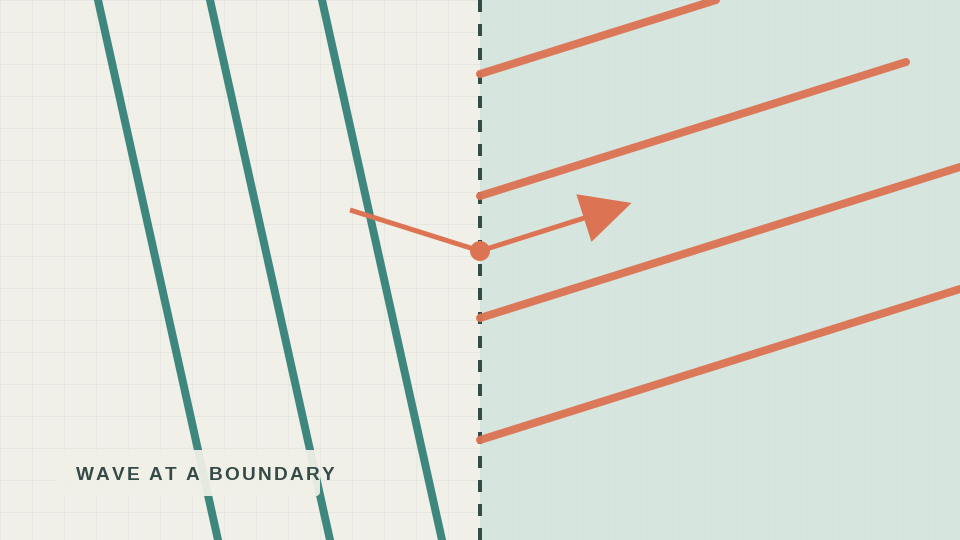
Compare wave reflection at a surface with refraction as waves enter a medium at a different speed.
 Launch
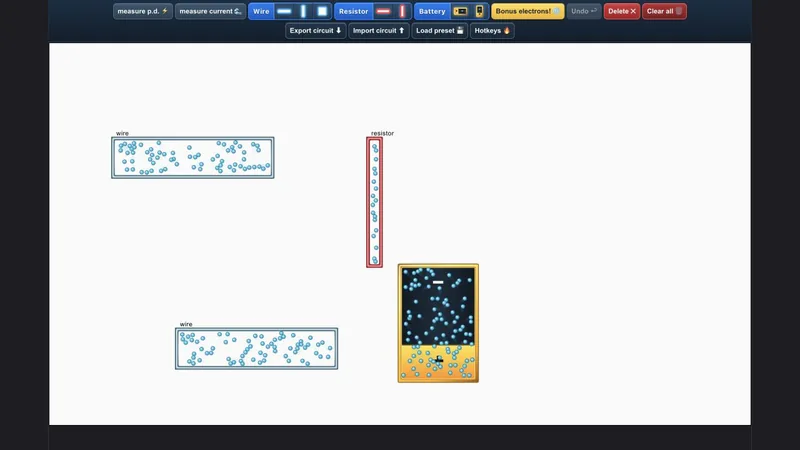
Build circuits at particle level and watch current, resistance and potential difference emerge.
 Launch
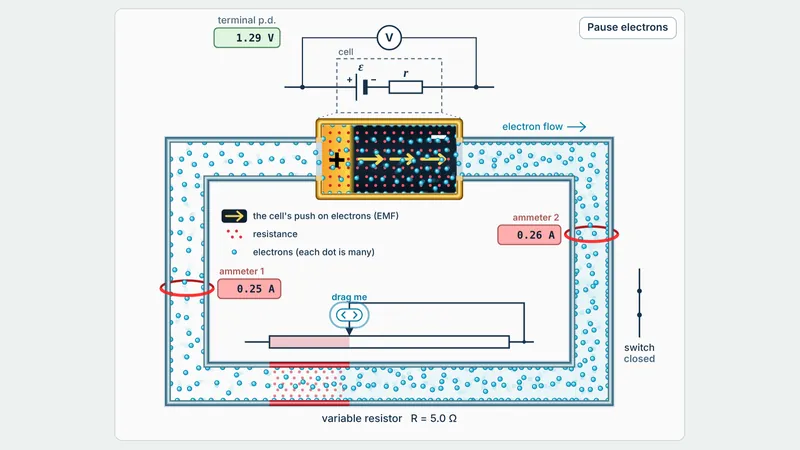
Watch electrons crowd round a circuit as a cell pushes them through its own resistance, and see the lost volts follow the current.
 Launch
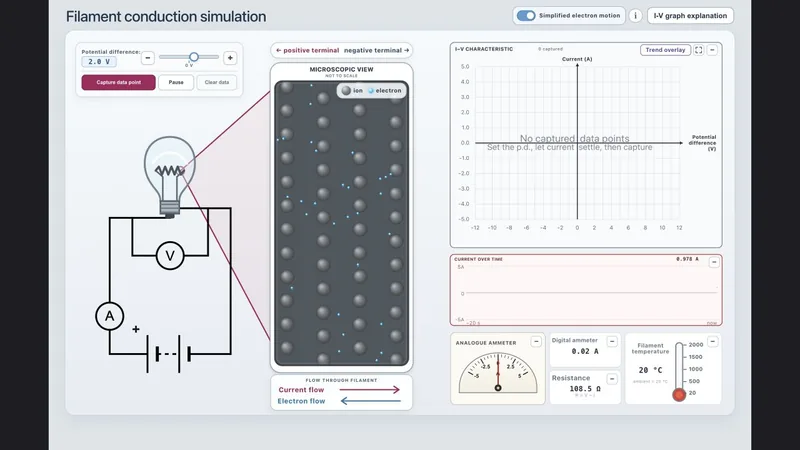
See how heating the filament produces the lamp’s distinctive non-linear I–V characteristic.
 Launch
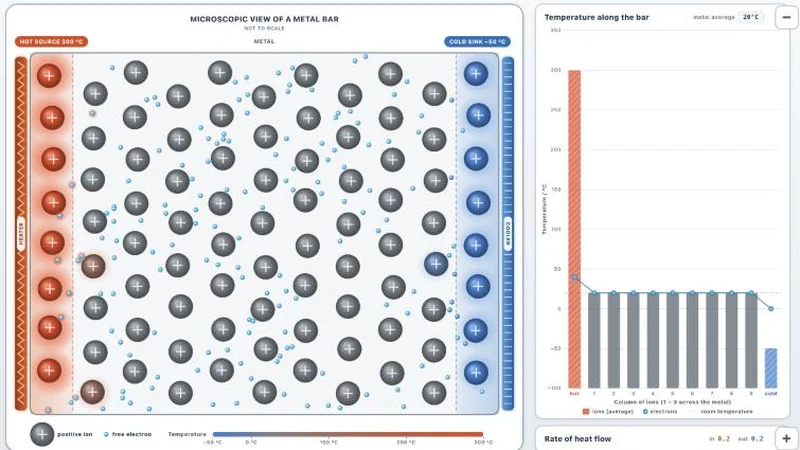
Heat one end of a metal bar and watch vibrating ions and free electrons carry the energy along to the cold end.
 Launch
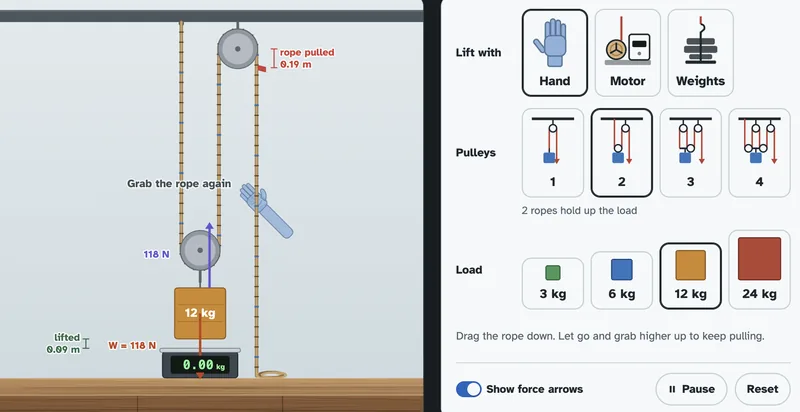
Lift a load with 1–4 pulleys, compare effort and distance, and explore how mechanical advantage changes the force needed.
 Launch
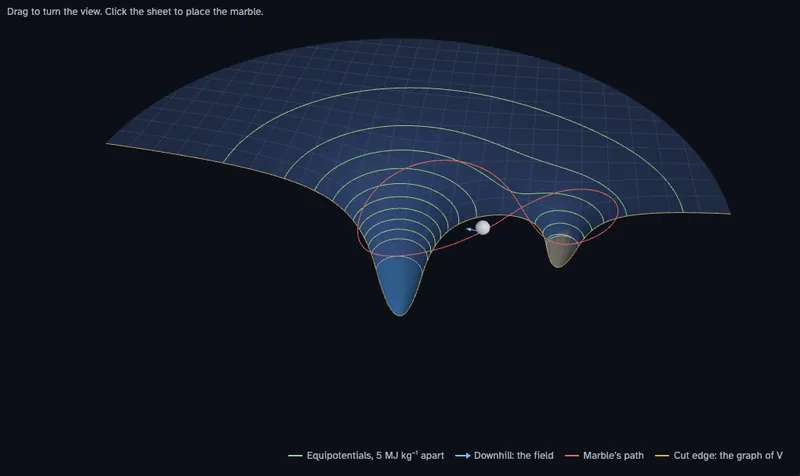
Visualise how mass creates gravitational fields and how field strength changes with distance.
 Launch
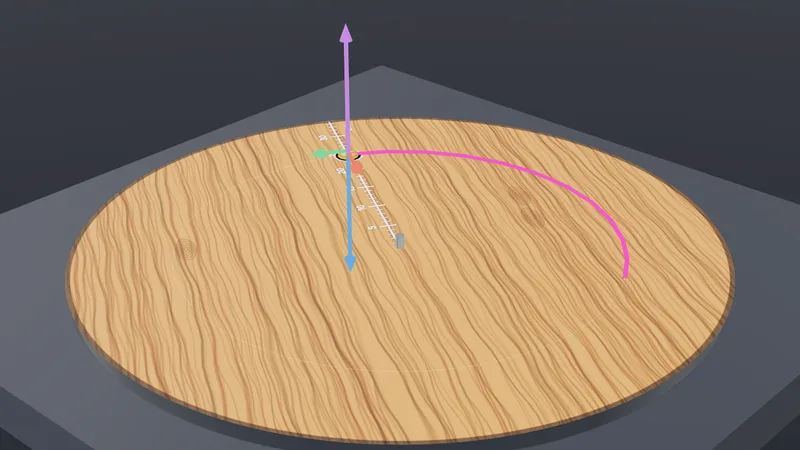
Spin a coin on a turntable in 3D. Change the angular velocity, radius, mass and surface, and see when friction can no longer supply mω²r and the coin slips off.
 Launch
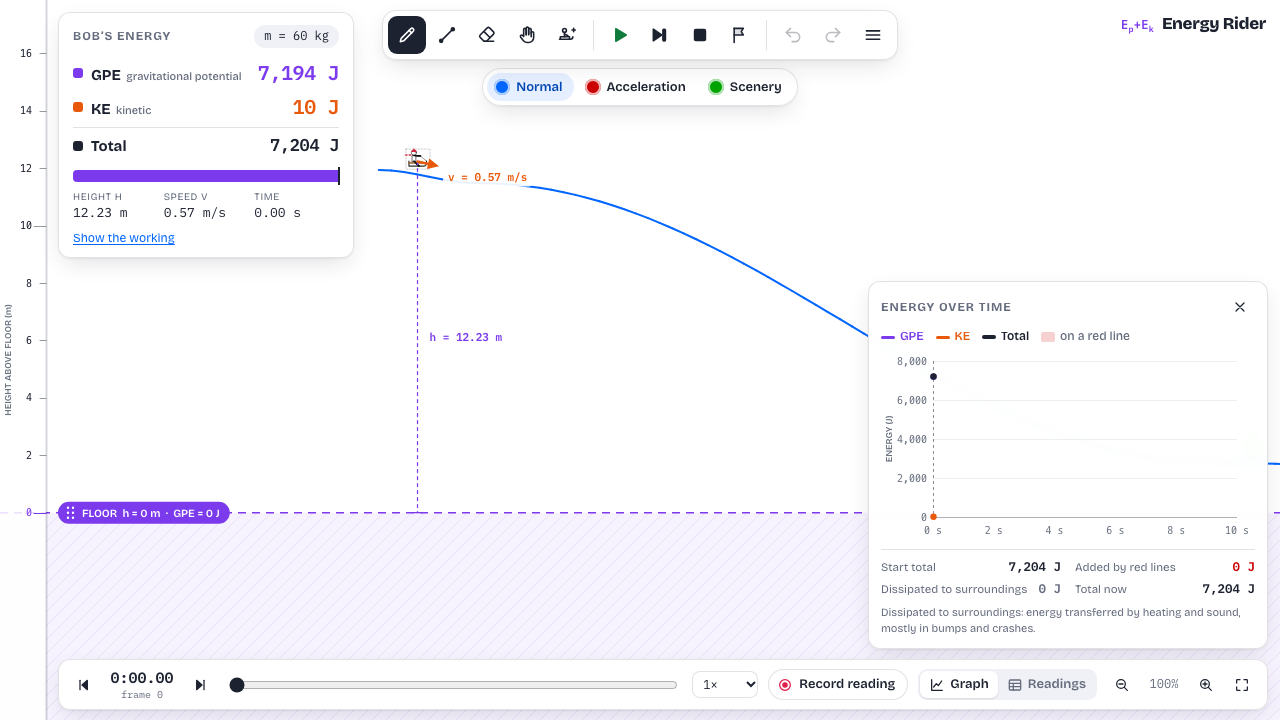
Draw a track, send Bob down it, and compare gravitational potential energy and kinetic energy frame by frame.
 Launch
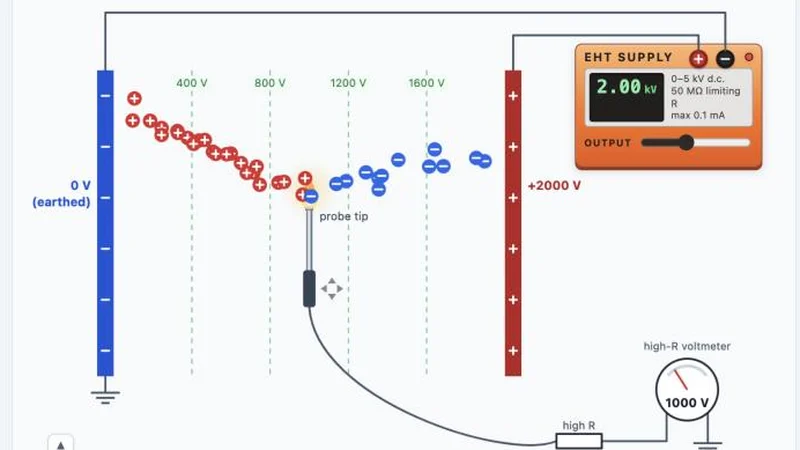
Map electric potential between parallel plates, around a candle and near a charged sphere with an ionising flame probe.
 Launch
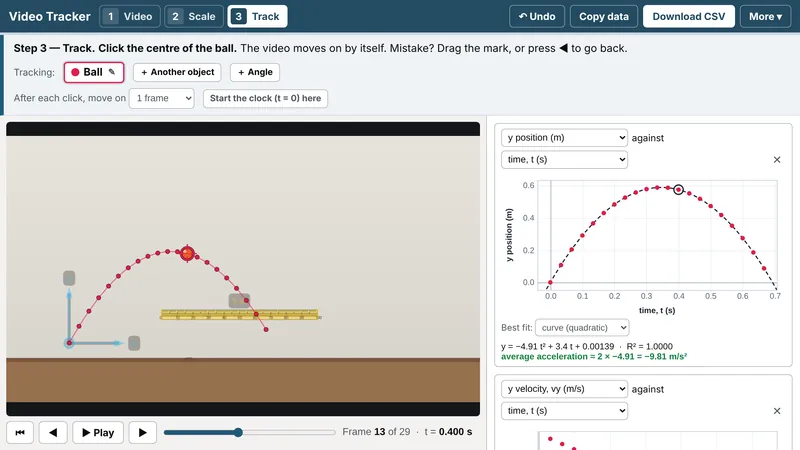
Film an experiment, set the scale and click the object in each frame to plot position, velocity and acceleration graphs with best-fit lines.
 Launch
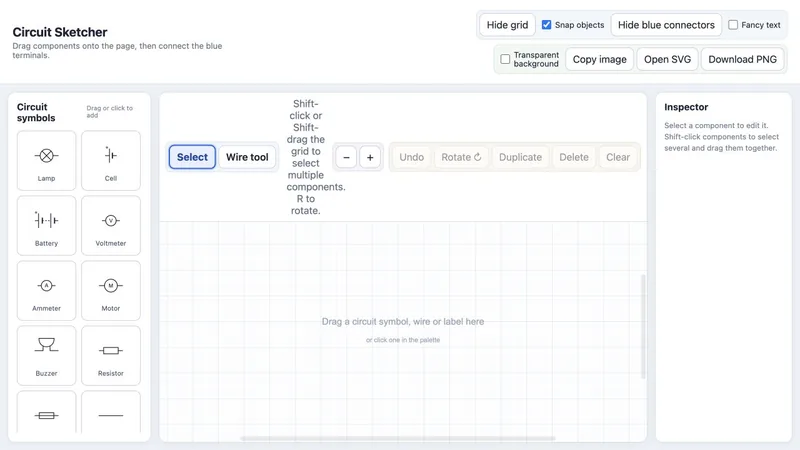
Sketch clean circuit diagrams quickly with familiar components and connections.
 Launch
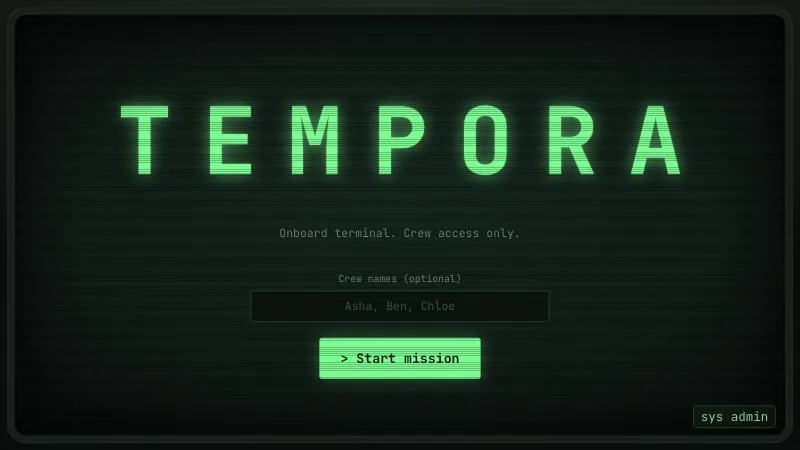
A 40-minute physics escape room: crews time a pendulum to test the gravity and use a red filter to restart the engines. Teacher guide, set-up and printables.